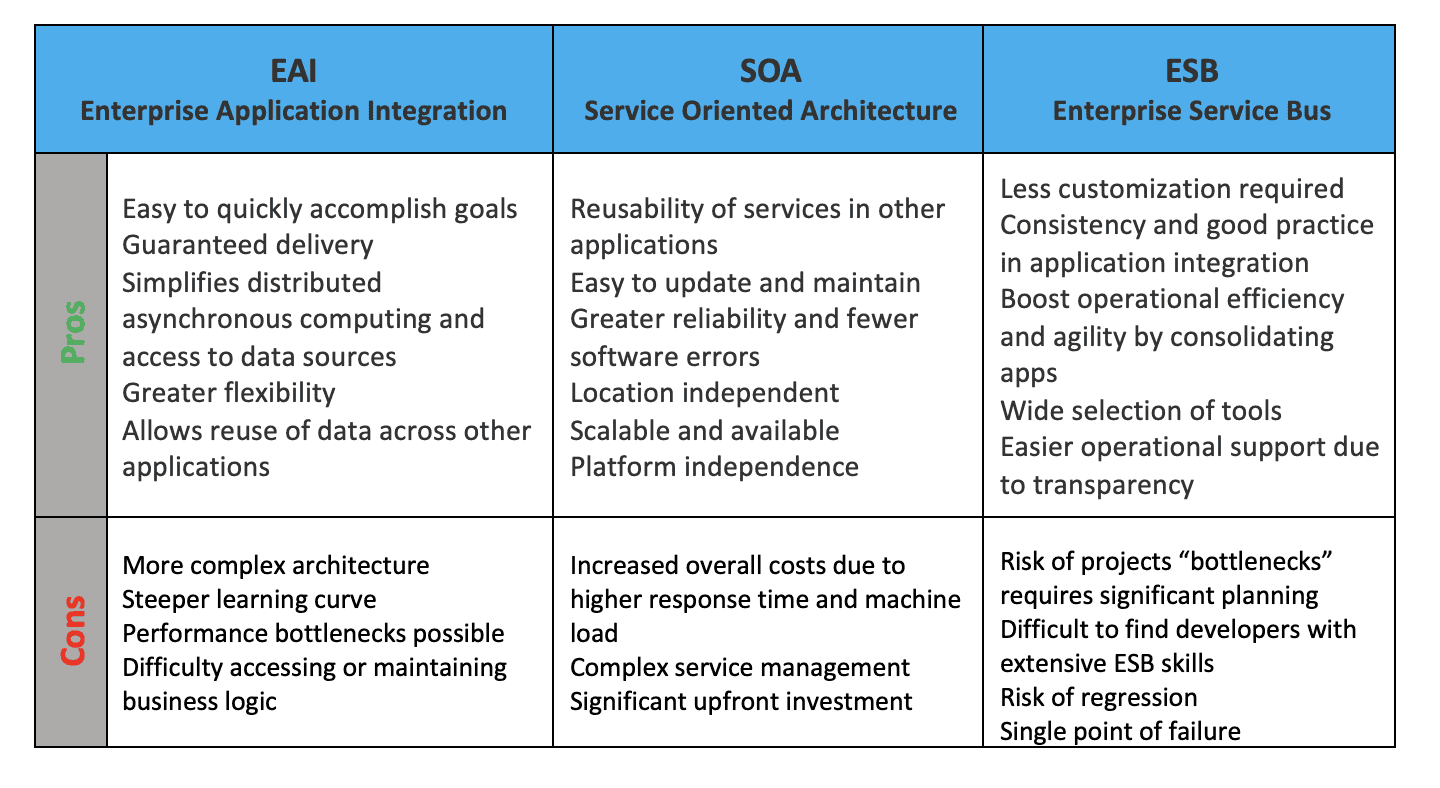
An ESB is one model of SOA implementation and SOA is one way to achieve EAI.
4th April 2023 | Vamseekrishna Malempati
What is EAI?
EAI, short for “Enterprise Application Integration,” is a framework that makes use of software and computer systems to enable data integration across applications within a single organization, while also simplifying business processes among connected applications and data sources.
There are three main types of EAI:
1. The Presentation Integration Model.
2. The Data Integration Model.
3. The Functional Integration Model.
The sharing of data and business processes between applications are its primary purposes. However, EAI also defines a set of principles for integration of multiple systems for communication architectures, such as message-oriented middleware (MOM).
EAI serves as a system that can provide a business service to simplify information data between diverse applications, which makes it possible to easily integrate them when needed.
This discipline of integrating applications and data within the enterprise has been a critical component of today's enterprise strategies. In fact, many vendors offer EAI suites that provide cross-platform, cross-language integration solutions.
What is SOA?
SOA (Service Oriented Architecture) can help to overcome all sorts of shortages in EAI and ESB technologies and provide a means for reusable services. It supports Distributed Enterprise Application Integration and “enterprise service bus” integration environments. The latter is the new software architecture (called “SOA-based enterprise service bus,” or simply ESB soa) which is a Web services-based application supporting platform ideal for transport adaptation, service adaptation and common services.
What is ESB?
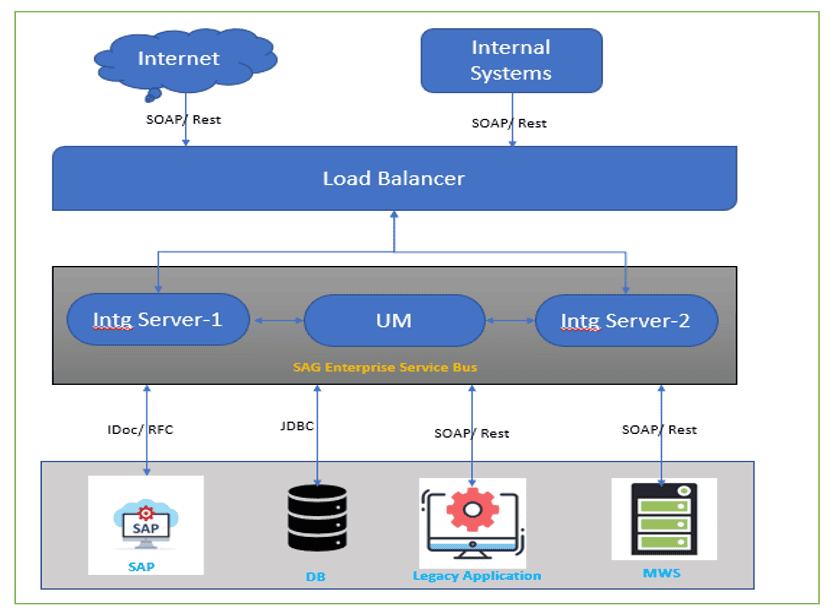
An ESB's (Enterprise Service Bus) primary function is to provide the connections between communicating applications - acting much like a router to control the data. It is commonly used in enterprise application integration (EAI) or service-oriented architecture (SOA) principles. The interaction and communication between components are across the bus, which has a similar function as a physical computer bus to handle data transfer or message exchange between services without writing any actual code.
Software AG offers a proven and pre-integrated software suite that makes it easy to quickly integrate systems, servers, processes, devices, partners and data. With this enterprise service bus platform, organizations not only get a solution for application integration, B2B and cloud integration but for managed file transfer, master data management and mobile applications as well.
Integration Architecture
A Winning Approach to Integration:
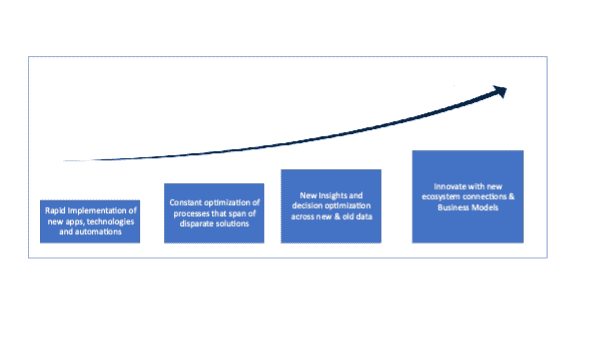
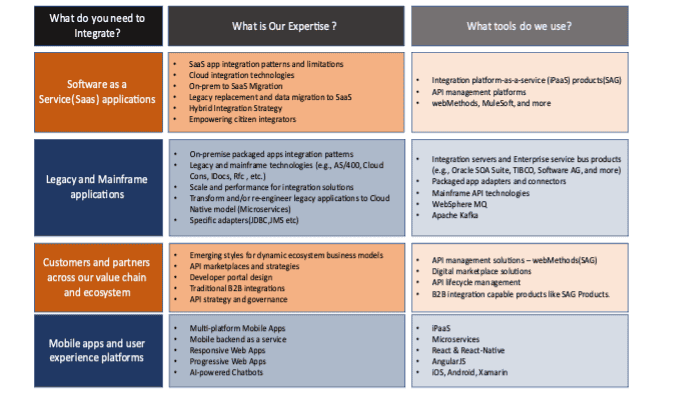
Right integration requires much more than technical expertise with integration products, strategic API design methods, cloud platforms, and advanced delivery methods (e.g., DevOps, CI/CD, site reliability engineering). Integration design starts with business design, so before we select and apply integration patterns, we ensure a strong understanding of:
Common integration challenges in large enterprises:
In most large enterprises, IT has grown and evolved over the years in both size and complexity. This includes in-house custom developed applications and off-the-shelf business applications such as CRM, ERP, Billing, etc. Though there is a customer facing element in these systems, these systems were not designed to factor multiple channels of access, exposure of data, and core use-cases as APIs, to third parties.
Compare this with today’s Digital Native start-ups. They have low obstacles to entry through Mobile-ready, API-friendly, third-party SaaS solutions. Large enterprises aren't able to simply “flip-the-switch” and move over to these new solutions in one-go.
Legacy and modern IT options will need to co-exist to factor in the vast amounts of customer and business data that have grown over the years as part of the legacy set-up. Making changes to your integration landscape to support such efficient co-existence of on-premise and SaaS applications is usually a part of integration transformation.
The most common challenges related to integration we see are:
All or many of the factors stated above collectively influence the successful delivery of strategic business transformation initiatives.