Riaz Ahmed ● 12 June 2024 ● 10 mins read
What is UX?
User experience (UX) involves the overall experience a person has when using a product, system, or service. It includes all elements of interaction between the end-user and the product, focusing on usability, accessibility, and efficiency.
The primary aim of UX design is to craft a seamless, intuitive, and pleasant experience for the user, facilitating their ability to achieve their goals and meet their needs. This process requires a deep understanding of user behavior, needs, and motivations, which is gained through thorough research and then applied to develop effective design solutions.
Characteristics of good user experience
What exactly makes a product effective for its users? Is it simplicity, structure, or functionality? The answer varies depending on the specific product. However, key characteristics of good UX include being usable, equitable, enjoyable, and useful.
Usable
If a product is usable, its design, structure, and purpose are clear and easy to use. When evaluating a product for usability, you can consider questions such as:
- Is everything in the design easy to find?
- Is the design’s functionality easy to understand?
- Can users accomplish specific tasks within the design?
Equitable
If a product is equitable, it means the design is beneficial to people with diverse abilities and backgrounds. In other words, the product's design addresses the needs of a varied audience and ensures a high-quality experience for all users, regardless of background, gender, race, or ability. When evaluating the equity of a product’s UX, you can consider questions such as:
- Are the needs of a diverse group of users considered?
- Does the product’s design address the needs of traditionally underrepresented and excluded groups?
Enjoyable
If a product is enjoyable, it means the design delights the user. The design reflects what the user may be thinking or feeling and creates a positive connection with them. When evaluating how enjoyable a product’s UX is, you can consider questions such as:
- Are there aspects of the design that consider the user’s feelings?
- Does the design inspire delight in the user?
- Does the design keep the user engaged throughout their experience?
Useful
If a product is useful, it means it effectively solves user problems. In other words, the design intentionally addresses a user problem that the designer has identified. When evaluating how useful a product’s UX is, you can consider questions such as:
- Does the design add value to the user’s experience?
- Does the design solve a problem for the user?
- Does the design help the user achieve a specific goal?
Thinking like a UX designer
Who are my users?
In the field of user experience design, the “user” comes first. A user is a person who is trying to solve a problem and is looking for a product or service to help them solve it. The user experience encompasses the journey that the user takes with that product or service. As a UX designer, your goal is to keep the user at the center of every decision you make. To achieve this, you need to get to know your user.
Most of the initial UX research conducted at the beginning of a project focuses on understanding the characteristics of your users, their goals, and their pain points. This understanding enables you to design experiences that are helpful and easy to use.
One key challenge in getting to know your users is avoiding a narrow view or making assumptions about what users need based on stereotypes.
To reach as many users as possible, you’ll consider questions such as these as part of your user research approach:
- Do my users have impairments or disabilities to consider–whether temporary, situational, or permanent?
- How familiar are my users with technology?
- How are my users accessing the product or service?
- Where and when are my users accessing the product or service?
- Have I considered all my potential users?
Designing cross-platform experiences
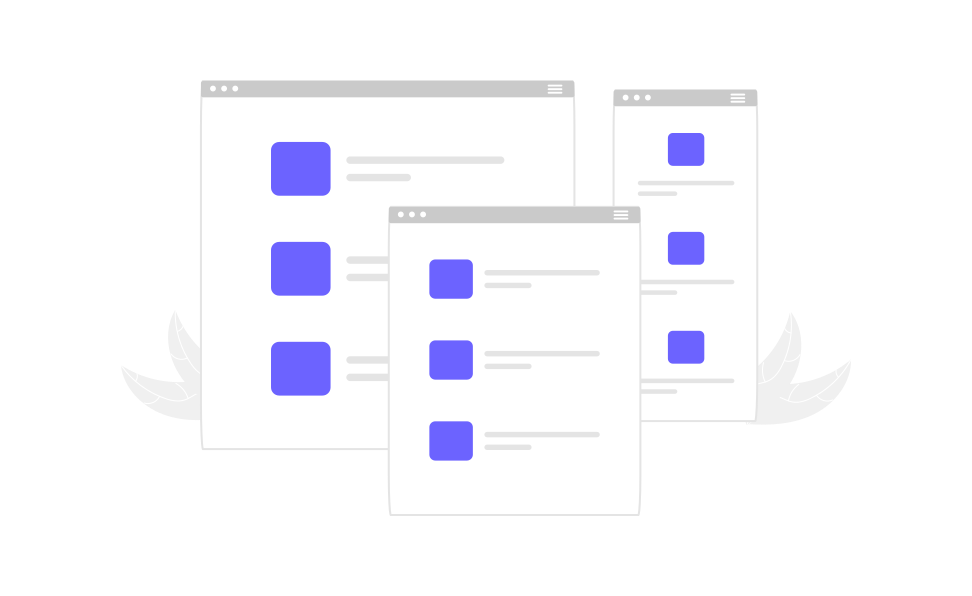
When designing a new product or feature, it’s important to consider the different types of platforms on which the design will be experienced. While there are countless platforms, desktop computers, laptops, and mobile phones are the most commonly used for interacting with apps and websites.
- Screen size - The first consideration when designing for various platforms is adjusting design elements and features to fit different screen sizes. For example, there's ample screen space on desktop and laptop computers, but designing for smaller screens like mobile phones requires careful prioritization of design elements due to limited space. This necessitates making every word, icon, and image count!
- Interaction - In addition to screen size, you need to consider how users interact with each platform and how those interactions might affect your design decisions.
- Content layout - In UX design, layouts refer to how information is organized on the screen. For desktop or laptop computers, you have the advantage of a wide, landscape (horizontal) screen where content can be laid out in columns with flexibility. Mobile phones, on the other hand, typically use portrait (vertical) mode, ideal for scrolling, but may also allow landscape (horizontal) mode. Designing for these different layouts requires consideration of user preferences and device capabilities.
- Functionality - Users may choose one platform over another based on functionality and the tasks they want to complete. Your designs for each platform may vary based on how and when you expect users to need the product.
"User experience (UX) designers focus on the experience that users have while using products like websites, apps, and physical objects. UX designers make those everyday interactions useful, enjoyable, and accessible."
Careers in the field of UX
UX researchers - UX Researchers conduct studies or interviews to examine how people use a product, identify pain points, and explore solutions. They also assess the usability of products by observing user’s complete tasks.
UX writers - UX Writers focus on making language within a product clear for a more intuitive user experience. They also define a brand’s voice and write labels for buttons and determine the tone of language used.
UX program managers - UX Program Managers ensure clear communication for building a useful product, including setting goals, writing project plans, and allocating team resources.
UX engineers - UX Engineers translate design intent into a functioning experience, ensuring designs are intuitive and technically feasible.
Interaction designers - Interaction Designers design the experience of a product and focus on understanding user flow to complete tasks on various platforms.
Visual designers - Visual designers focus on how a product or technology looks. They are often responsible for designing logos, illustrations, and icons, as well as deciding on font color, size, and placement. Visual designers focus on the layout of each page or screen and make all the design elements fit together in a visually appealing way.
Motion designers - Motion designers think about what it feels like for a user to move through a product and how to create smooth transitions between pages on an app or website. They may also create animations or visual effects to bring their design ideas to life.
Virtual reality (VR) and augmented reality (AR) designers - VR and AR Designers create immersive experiences, either by blocking out physical surroundings (VR) or by adding virtual elements to the physical world (AR).

If this is of interest and you would like to explore further then please contact info@anyaconsultancy.com
For more information on ACS, technology and domain expertise, please visit our website at www.anyaconsultancy.com
About Anya Consultancy Services
ACS is a global SI headquartered in the UK with offices On-shore in England and Scotland, Near-shore in Romania and Portugal and Off-shore in India.
We started in 2010 as an integration specialist, working with big enterprises to integrate ERP, Manufacturing, Warehouse and e-Commerce solutions.
Since that time, we have widened our portfolio via a mix of organic growth and acquisitions to encompass a Hi-tech engineering capability, our successful IT services business and a growing portfolio of SaaS solutions from in store radio station management through to Digital catering solutions feeding ‘000s of NHS patients every day.